
Scores describe.
Capacity guides.
Existing trackers explain what happened. PULSE frames what today can reasonably hold.
Product Future 02 · Wellbeing · Adaptive planning
A capacity companion that translates recovery, workload, stress and commitments into one understandable question: what can I realistically take on today?
Concept · Strategy · Identity · Experience · Direction
01 · The opportunity
PULSE combines body signals with the commitments people choose to share, then explains approaching overload and offers small, reversible adjustments—without turning wellbeing into another score.
02 · Research & tension
Most tools stop at measurement. PULSE explores the harder design problem: turning changing capacity into a kinder, more realistic decision about the day ahead.
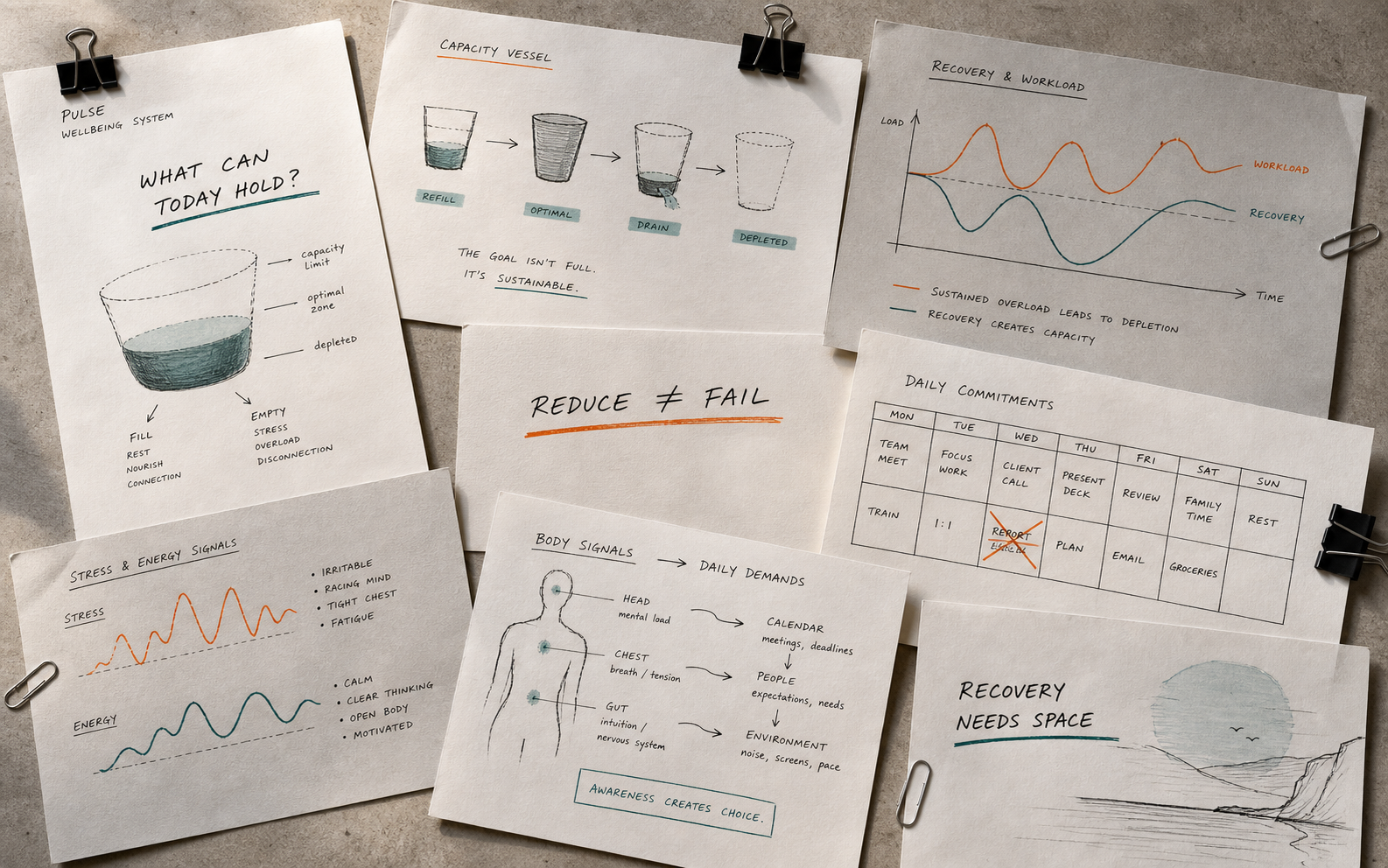
Existing trackers explain what happened. PULSE frames what today can reasonably hold.
Workload, stress and personal commitments matter alongside selected body signals.
The useful action may be to postpone, reduce or stop—not add another goal.
03 · The capacity model
Typical trackerMore data → More scores → More goals
PULSECapacity → Choice → Adjustment
Only the signals and context a person chooses to share. PULSE is a planning aid—not a diagnosis.
04 · Adaptive day
Combines selected recovery signals with the shape of the day.
Notices when physical, mental and practical demand begin to converge.
Suggests what could move, shrink or wait—without issuing another target.
Keeps rest visible as part of the plan, not a failure to perform.
05 · Design leadership
A speculative product future by FerozeBukht.